
Enhancing Observability with Supabase-js and W3C Trace Context
August 19, 2026
Introduction
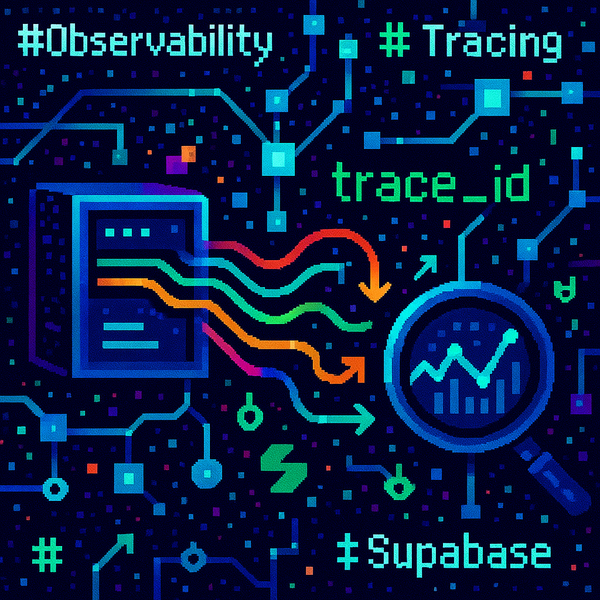
Tracing distributed systems can be challenging, especially when trying to correlate client-side traces with backend logs. Supabase-js now addresses this by propagating W3C Trace Context, allowing a shared trace_id between client traces and Supabase logs.
What Does This Mean?
With W3C Trace Context propagation, each client trace seamlessly connects to the corresponding Supabase log entry. This unified trace_id enables easier debugging and monitoring, as you can follow a single trace across different services.
Why It Matters
In modern applications, observability is key to maintaining reliability and performance. Linking client and server traces improves visibility into how requests flow through your system, helping pinpoint issues faster and optimize workflows.
Conclusion
Supabase-js adopting W3C Trace Context is a strategic step toward enhanced observability. By unifying tracing across client and backend, developers gain finer insight into application behavior, reducing troubleshooting time and improving system health.